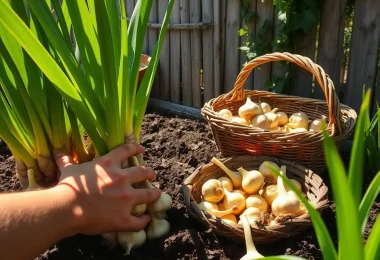

If you are wondering when to plant daffodil bulbs, the answer is fall: from September to November, ideally two to four weeks before the ground freezes, once the soil has cooled below 60°F (15°C). Daffodils need several weeks of cool weather to grow roots before winter, and a cold period to bloom. Plant them in autumn and they will be among the first flowers in your garden next spring.
The good news: daffodils are one of the easiest and most reliable bulbs you can grow. Deer and squirrels leave them alone, and they come back bigger every year.

Quick Answer: When to Plant Daffodil Bulbs
- Season: fall, usually September to November
- Soil temperature: below 60°F (15°C)
- Timing rule: two to four weeks before the ground freezes
- Depth: about 6 inches, or two to three times the height of the bulb
- Bloom time: late winter to mid-spring, depending on variety and climate
When to Plant Daffodil Bulbs by Zone
Daffodils grow well in USDA zones 3 to 8, and some types in zone 9. Check your zone on the USDA Plant Hardiness Zone Map, then use this chart:
| USDA zone | Best time to plant | Notes |
|---|---|---|
| Zones 3–4 | September | Plant early so roots establish before hard frost |
| Zone 5 | Late September to October | Mulch after the ground starts to freeze |
| Zone 6 | October | The ideal daffodil planting month |
| Zone 7 | October to November | Wait until the soil has cooled |
| Zone 8 | November | Choose early, heat-tolerant varieties |
| Zone 9 | November to December | Grow jonquils and tazetta types, which need little chill |
| UK and Ireland | September to October | Earlier than tulips, which are best planted in November |
How to Plant Daffodil Bulbs Step by Step

- Buy firm, plump bulbs. Avoid bulbs that are soft, moldy or very light. Bigger bulbs (“double-nose” bulbs) give more flowers.
- Choose a sunny spot. Daffodils need at least six hours of sun while they are growing in spring. Under deciduous trees works well, because the trees are still bare when daffodils bloom.
- Check the drainage. Bulbs rot in waterlogged soil. Mix compost into heavy clay or plant on a slope or in a raised bed.
- Dig the hole. Plant about 6 inches deep for standard bulbs, or two to three times the bulb’s height.
- Pointy end up. Set the bulb with the flat root plate down and the pointed tip facing up.
- Space and group. Leave 3–6 inches between bulbs. Plant in clusters of 7 to 12 for a natural, full look.
- Water well once. Cover, firm the soil and water thoroughly to start root growth.
Daffodil Planting Depth and Spacing Chart
| Daffodil type | Planting depth | Spacing |
|---|---|---|
| Large trumpet daffodils | 6–8 inches (15–20 cm) | 5–6 inches |
| Standard daffodils | 6 inches (15 cm) | 4–5 inches |
| Miniature daffodils (e.g. ‘Tête-à-Tête’) | 3–4 inches (8–10 cm) | 2–3 inches |
| In pots | Tips just below the surface | Almost touching |
Why Daffodils Are the Easiest Spring Bulbs
- Pest-proof: daffodil bulbs and leaves contain lycorine, a bitter, toxic compound, so deer, squirrels, voles and rabbits avoid them. If animals dig up your tulips, plant daffodils around them.
- They multiply: healthy bulbs form new offsets every year, so a small planting slowly becomes a large drift. This is called naturalizing.
- Low care: once planted, they need almost no attention.

Is It Too Late to Plant Daffodil Bulbs?
Daffodils prefer earlier planting than tulips because their roots need time to grow. Still, as long as you can dig the soil, plant them. Late-planted bulbs may bloom a little later or smaller in the first year, then catch up the following spring. Never store bulbs until spring: they dry out and lose their flowers.
Daffodil Care After Blooming
- Remove spent flowers, so the plant does not waste energy making seeds.
- Leave the leaves for about six weeks, until they turn yellow. They feed next year’s flowers. Do not tie or braid them.
- Feed lightly with a balanced bulb fertilizer in early spring as shoots appear.
- Divide crowded clumps every 3–5 years, when flowering decreases. Lift them after the leaves die back and replant right away.
Why Are My Daffodils Not Blooming?
- Leaves cut too early the previous year, so the bulb could not store energy.
- Too much shade: trees or shrubs have grown over the spot.
- Overcrowding: old clumps need dividing.
- Planted too shallow or in very warm areas without enough winter cold.
Planting other bulbs this fall too? Read our guides on when to plant tulip bulbs and how to plant hyacinths. Daffodils are also part of the narcissus family, the December birth flower.
Conclusion
The best time to plant daffodil bulbs is fall, two to four weeks before the ground freezes. Plant them 6 inches deep, pointy side up, in a sunny, well-drained spot, and let the leaves die back naturally after flowering. With that simple routine, your daffodils will return and multiply for decades.
FAQ
What month should I plant daffodil bulbs?
In most of the US, plant daffodil bulbs in October. Plant in September in cold zones (3–4) and in November in warm zones (8–9). In the UK, plant in September or October.
Can you plant daffodil bulbs in spring?
Dry bulbs planted in spring rarely flower that year. If you find bulbs late, plant them as soon as possible or buy potted daffodils already in growth.
Do daffodils come back every year?
Yes. Daffodils are perennial and usually return and multiply every year, as long as their leaves are left to die back naturally.
How deep should daffodil bulbs be planted?
About 6 inches deep for standard bulbs, which is two to three times the height of the bulb. Miniature varieties go 3–4 inches deep.
Are daffodils poisonous to pets?
Yes. The ASPCA lists daffodils as toxic to dogs, cats and horses, and the bulbs are the most dangerous part. Keep pets from digging in freshly planted beds.